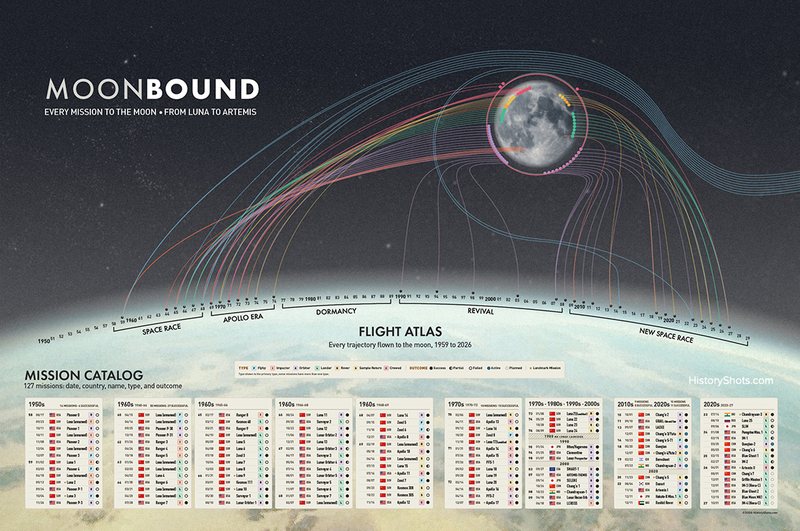
Mission Summary
The Emirates Lunar Mission was the United Arab Emirates’ first mission to the Moon and the nation’s first attempt to operate a robotic rover on another celestial body. Led by the Mohammed Bin Rashid Space Centre (MBRSC), the mission carried the Rashid Rover, a small four-wheeled rover designed to study the physical properties of the lunar surface, including dust, soil, and the effects of the harsh lunar environment. The rover was launched on December 11, 2022, aboard a Falcon 9 rocket as part of the Japanese company ispace’s Hakuto-R Mission 1.
After a journey of more than four months, the Hakuto-R lander began its descent toward the Moon on April 25, 2023. During the final stages of landing, communication with the spacecraft was lost, and the lander crashed into the lunar surface. As a result, Rashid Rover was never deployed and was unable to conduct its planned scientific investigations.
Although the mission did not achieve a successful landing, it marked an important milestone for the UAE’s growing space program. The technologies, engineering experience, and international partnerships developed through the Emirates Lunar Mission have helped prepare the UAE for future robotic exploration and strengthened its role in international lunar exploration.
Sources and notes can be found on the Sources page.