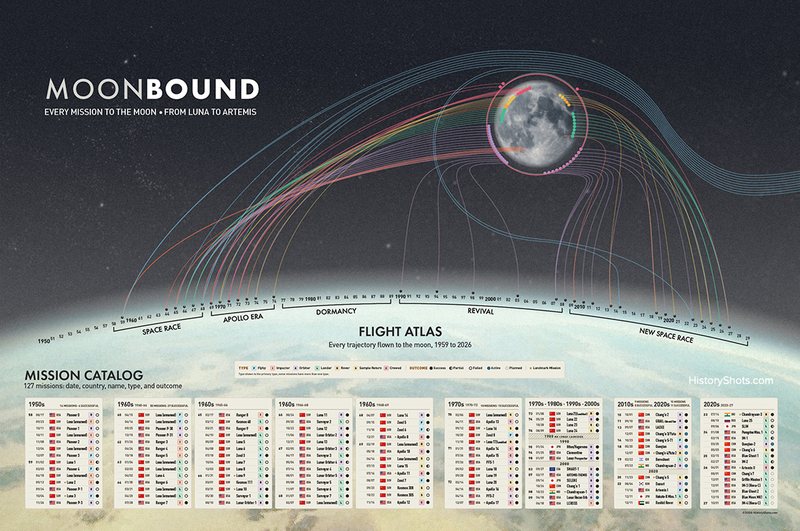
Mission Summary
Hakuto-R Mission 2 was the second lunar landing attempt by the Tokyo company ispace, flying a lander named Resilience that carried the fixes from the first mission's crash. Launched on January 15, 2025 on a Falcon 9 from Kennedy Space Center, sharing the rocket with Firefly's Blue Ghost 1, Resilience took a slow, low-energy route outward and entered lunar orbit on May 6, 2025. Aboard rode Tenacious, a five-kilogram micro rover built by the company's Luxembourg subsidiary, along with commercial and cultural payloads.
The landing attempt came on June 5, 2025, targeting Mare Frigoris in the Moon's far north. The descent ran normally until its final phase, when the laser rangefinder returned faulty altitude readings and Resilience came down too fast. Contact was lost about 90 seconds before the planned touchdown, and NASA's Lunar Reconnaissance Orbiter later photographed the impact site. ispace traced the failure to the rangefinder hardware, found the guidance software and propulsion had performed as designed, and carried the lessons toward its larger third lander.
Sources and notes can be found on the Sources page.