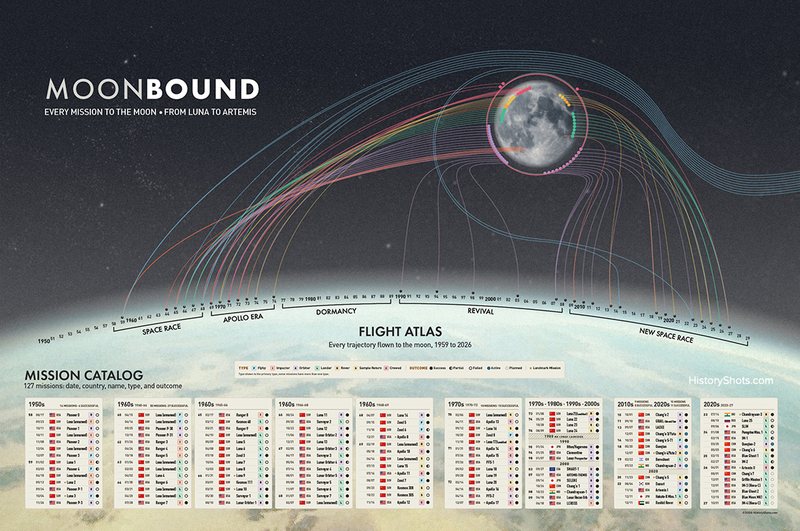
Mission Summary
Kosmos 300 was a Soviet spacecraft launched on September 23, 1969, as part of the Luna sample-return program. Although publicly given the generic Kosmos designation because it failed to leave Earth orbit, the spacecraft was actually an E-8-5 lunar sample-return vehicle intended to soft-land on the Moon, collect lunar soil, and return it automatically to Earth.
A malfunction in the Proton launch vehicle’s upper stage prevented the spacecraft from achieving the velocity needed to reach the Moon. Instead, it remained in Earth orbit, where the mission ended after only a few days.
While Kosmos 300 never reached its destination, it was an important step in the development of the Soviet robotic sample-return program. Engineering lessons from the mission contributed to improvements that led to the success of Luna 16 less than a year later, the world’s first robotic lunar sample-return mission.
Sources and notes can be found on the Sources page.