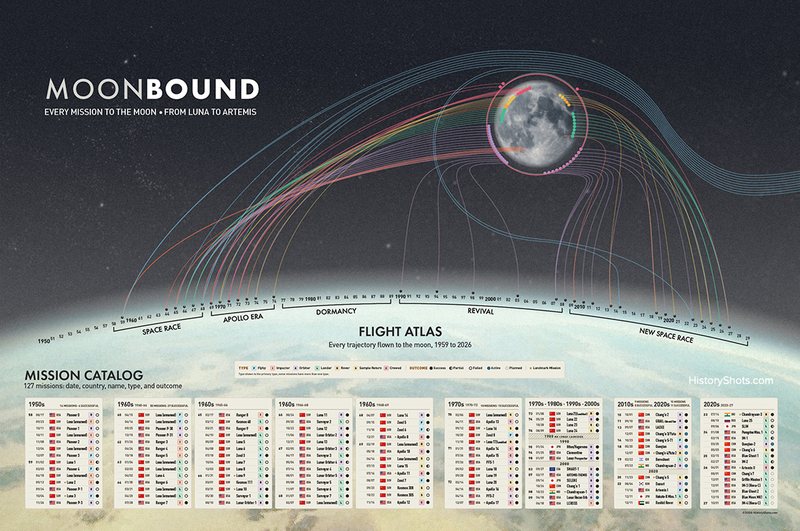
Mission Summary
Luna 23 was a Soviet mission intended to continue the successful Luna robotic sample-return program by collecting soil from the Moon and returning it to Earth. Launched on October 28, 1974, the spacecraft landed in the Mare Crisium region, where it was designed to drill into the lunar surface and launch a sample capsule back to Earth.
The spacecraft successfully entered lunar orbit and made a soft landing on November 6, 1974. However, the lander was damaged during touchdown, likely when it struck uneven terrain. The damage prevented the drill from operating, making it impossible to collect a soil sample or complete the return mission.
Although Luna 23 failed to return lunar material, the spacecraft remained on the Moon and provided engineers with valuable information about landing operations. The experience helped improve the design of the follow-on Luna 24 mission, which successfully returned lunar samples to Earth in 1976.
Sources and notes can be found on the Sources page.