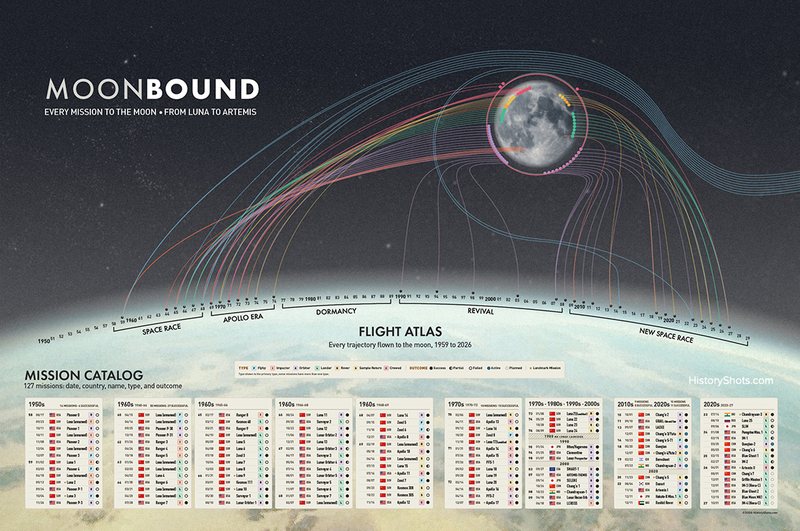
Mission Summary
Luna 24 was the Soviet Union’s third and final successful robotic lunar sample-return mission and the last Soviet spacecraft sent to the Moon. Launched on August 9, 1976, the mission was designed to succeed where Luna 23 had failed by collecting a deep core sample from the Mare Crisium region and returning it safely to Earth.
After a successful soft landing, Luna 24 drilled more than two meters beneath the lunar surface, far deeper than previous robotic sample-return missions, and collected a 170.1-gram core sample. The ascent stage then lifted off automatically from the Moon, carrying the sealed sample capsule back to Earth. The capsule landed safely in Kazakhstan on August 22, 1976, completing the mission.
Luna 24 marked the end of the Soviet Luna program and remained the world’s most recent lunar sample-return mission for more than 44 years, until China’s Chang’e 5 returned samples in 2020.
Sources and notes can be found on the Sources page.