Mission Summary
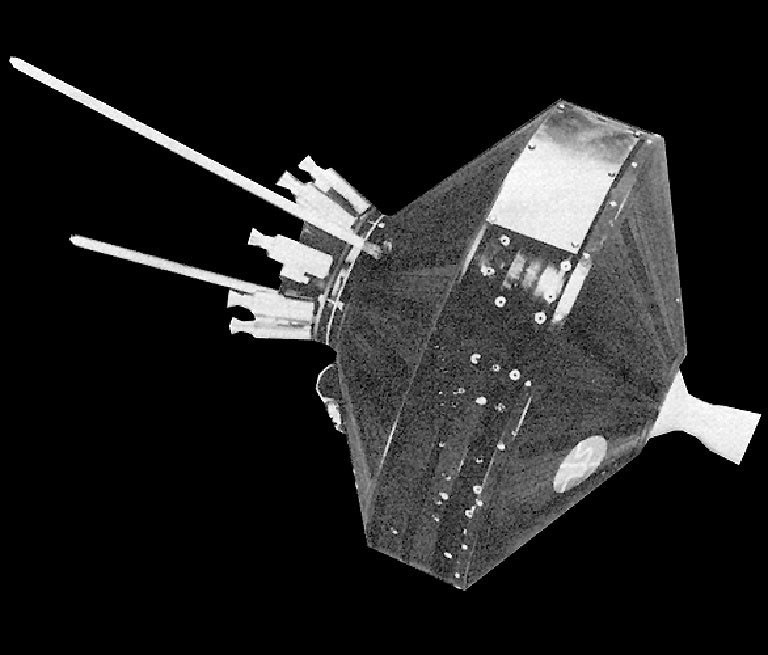
Pioneer 0, the first attempt to launch a probe into deep space, was launched on August 17, 1958. Managed by the U.S. Air Force under the direction of the Advanced Research Projects Agency (ARPA), this mission took place just months before the official creation of NASA.
The goal was to push past Earth's gravitational boundaries, complete a two-and-a-half-day journey to the Moon, and slip into a permanent lunar orbit. Once there, the small, striped spacecraft was intended to study the lunar environment and transmit the first-ever images of the Moon's unseen far side.
Instead, the mission ended almost as soon as it began. Just over 73 seconds into the flight, a catastrophic mechanical failure ripped through the rocket's first stage. The vehicle lost control and exploded nine miles above the Atlantic Ocean. In a notable final moment, the tiny probe briefly survived the blast, continuing to send erratic radio signals back to ground stations as it fell toward the sea. Though a total loss, Pioneer 0 marked the true opening chapter of the deep-space era.
Sources and notes can be found on the Sources page.