Mission Summary
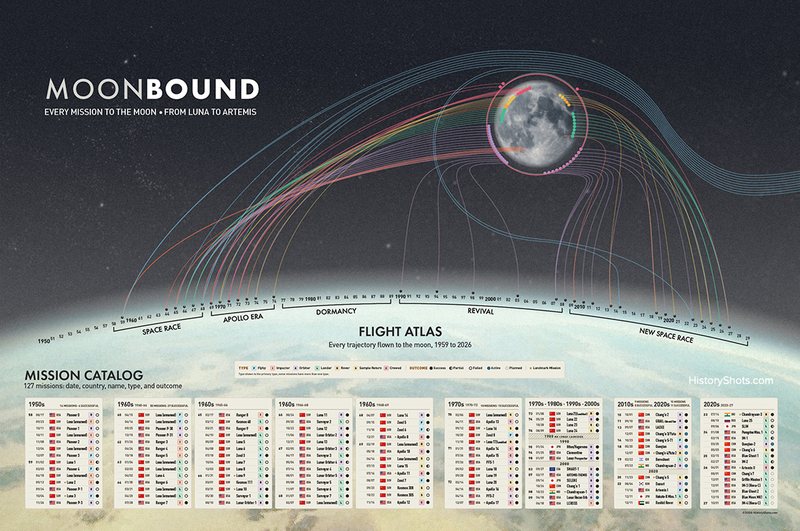
The unnamed Luna mission launched on February 19, 1969, was the Soviet Union’s first attempt to land a Lunokhod rover on the Moon. Internally designated Ye-8 No. 201 and identified by NASA as Luna 1969A, the mission was designed to soft-land on the lunar surface and deploy the first remotely operated rover to explore another world. The mission marked the beginning of the ambitious Lunokhod program, which sought to conduct detailed robotic exploration of the Moon before the arrival of astronauts.
Only 51 seconds after liftoff, the Proton-K launch vehicle failed when the newly designed payload fairing collapsed during maximum aerodynamic pressure. The damaged rocket lost control and exploded, destroying both the spacecraft and the Lunokhod rover before they could reach Earth orbit. Because the mission failed during launch, it was never assigned an official Luna mission number.
Although the mission ended almost immediately, it provided engineers with critical information about the launch vehicle and payload fairing design. The problems were corrected, and the Lunokhod program ultimately succeeded when Luna 17 delivered Lunokhod 1 to the Moon in November 1970, making it the first rover to operate on another celestial body.
Sources and notes can be found on the Sources page.