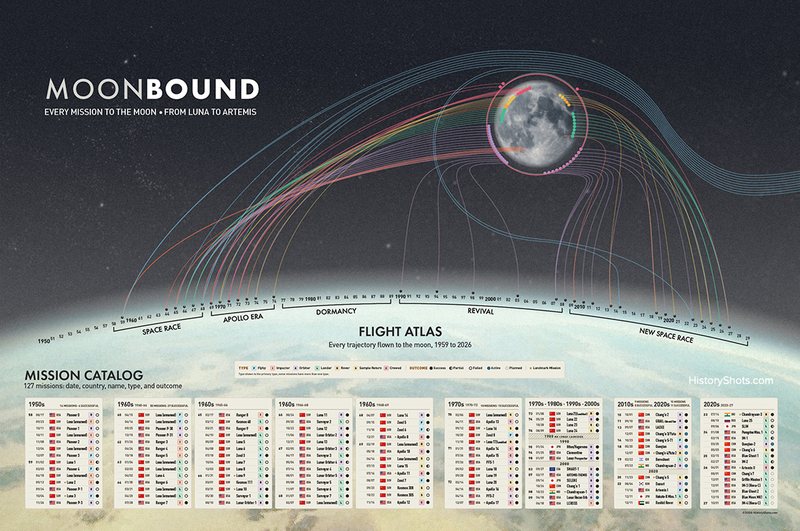
Mission Summary
The unnamed Luna mission launched on June 14, 1969, was the Soviet Union’s first attempt to return lunar samples to Earth using the new E-8-5 spacecraft. The mission was intended to soft-land on the Moon, collect a sample of lunar soil with an automated drill, and return it to Earth without human intervention. It represented a major technological step in the Soviet robotic lunar exploration program.
The mission ended almost immediately after liftoff when the Proton launch vehicle failed before the spacecraft could escape Earth. As a result, the spacecraft never reached the Moon or tested its sample-return systems.
Although unsuccessful, the June 1969 launch marked the beginning of the Soviet Luna sample-return effort. Lessons learned from this and other early failures led directly to the success of Luna 16, which became the world’s first robotic mission to return lunar samples to Earth the following year.
Sources and notes can be found on the Sources page.