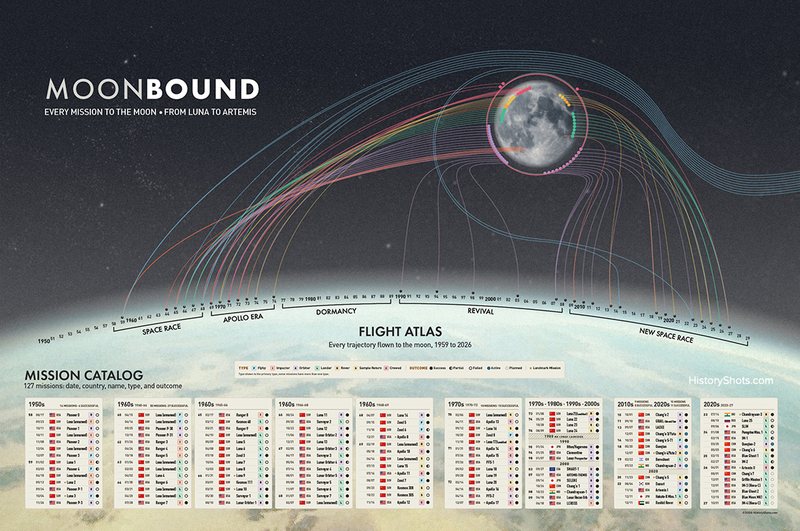
Mission Summary
Apollo 10 was the final full-scale rehearsal for humanity’s first landing on the Moon. Launched on May 18, 1969, the mission was designed to test every phase of a lunar landing except the actual touchdown. It carried astronauts Thomas Stafford, John Young, and Eugene Cernan to the Moon, where they demonstrated that NASA’s spacecraft, procedures, and flight plans were ready for the historic Apollo 11 mission.
After entering lunar orbit, Stafford and Cernan descended in the Lunar Module Snoopy to within about 15 kilometers (9 miles) of the lunar surface while Young remained in the Command Module Charlie Brown. The crew tested the Lunar Module’s engines, navigation systems, communications, rendezvous procedures, and docking operations, while also photographing the planned Apollo 11 landing site in the Sea of Tranquility. Every major objective was completed successfully, providing engineers and mission planners with the final confidence they needed before attempting a lunar landing.
Apollo 10 proved that NASA was fully prepared to land astronauts on the Moon. By successfully completing every critical step except the landing itself, the mission cleared the way for Apollo 11 just two months later. It remains one of the most important test flights in the history of space exploration, demonstrating that the technology and procedures developed during the Apollo program were ready for humanity’s first steps on another world.
Sources and notes can be found on the Sources page.